Most people hear the word resilience and think it means “being tough” or “sucking it up.” That’s not what resilience is.
Resilience is the ability to bend without breaking.
It’s your capacity to experience stress, adversity, loss, disappointment, trauma, pain, uncertainty, or change—and still continue moving forward in a healthy and meaningful way.
Think about a tree during a storm.
A rigid tree snaps.
A resilient tree bends, sways, adapts, and survives.
Humans are the same way.
Why Should I Care About Resilience?
Because life guarantees adversity.
No one escapes:
- Loss
- Illness
- Financial struggles
- Relationship challenges
- Aging
- Trauma
- Stress
- Failure
- Unexpected change
The question isn’t:
“Will hardship happen?”
The question is:
“How will I respond when it does?”
Resilience determines whether a difficult event becomes a temporary setback or a permanent obstacle.
What Happens When We Lack Resilience?
Without resilience, stress accumulates.
Small problems start feeling overwhelming.
We may become:
- Angry
- Isolated
- Depressed
- Anxious
- Reactive
- Hopeless
- Stuck
For veterans especially, years of carrying heavy burdens can lead to feeling like you’re constantly operating in survival mode.
You can survive for years that way.
But survival is not the same as living.
What Does Resilience Give Us?
Resilience helps us:
- Stay calm under pressure.
- Recover faster from setbacks.
- Think more clearly during difficult situations.
- Build healthier relationships.
- Improve physical health.
- Increase confidence.
- Maintain hope during uncertainty.
- Continue pursuing meaningful goals.
Resilience doesn’t remove the storm.
It helps you navigate through it.
A Veteran Example
Imagine two veterans experience the exact same challenge:
They lose their job unexpectedly.
The first veteran says:
“Everything is falling apart. I’ll never recover from this.”
The second veteran says:
“This is difficult, but I’ve overcome difficult things before. What’s my next step?”
Both feel stress.
Both feel uncertainty.
The difference is resilience.
Resilience creates space between the event and the response.
The Real Goal
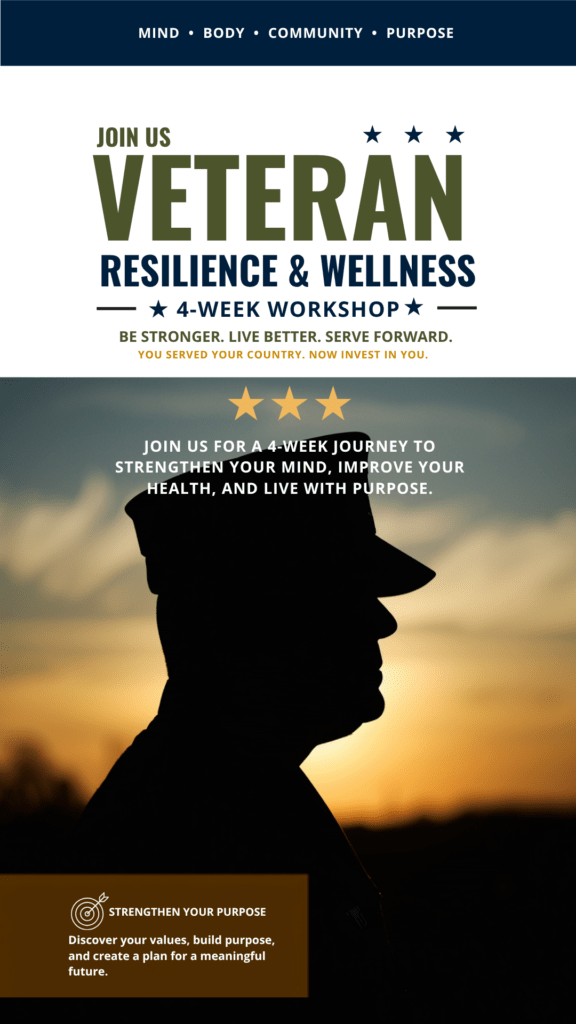
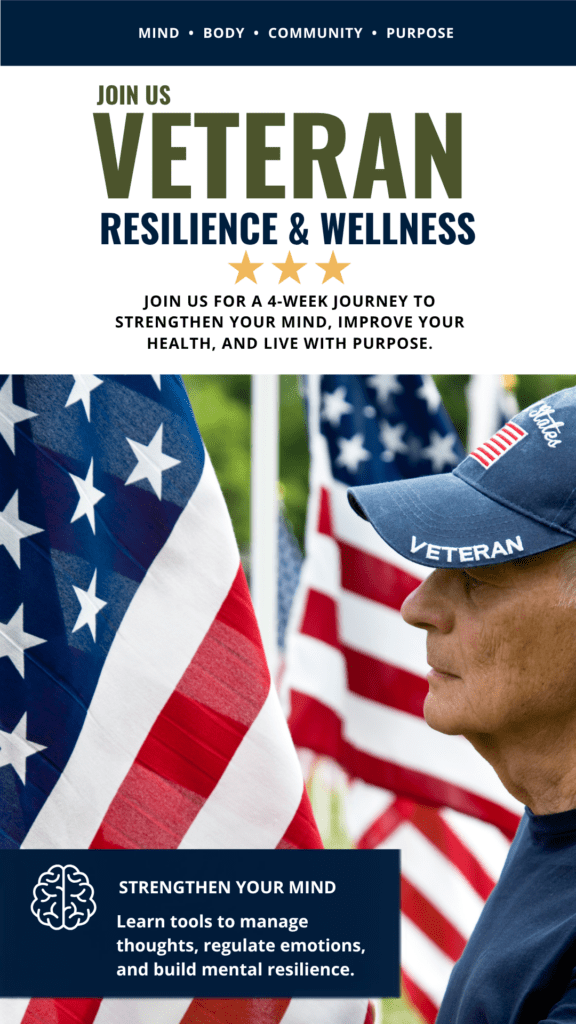
The goal of this workshop is not to make people tougher.
The military already taught many veterans how to endure hardship.
The goal is to help veterans learn how to:
- Recover faster
- Adapt better
- Manage stress effectively
- Connect with others
- Find purpose again
- Build a life worth living—not just surviving
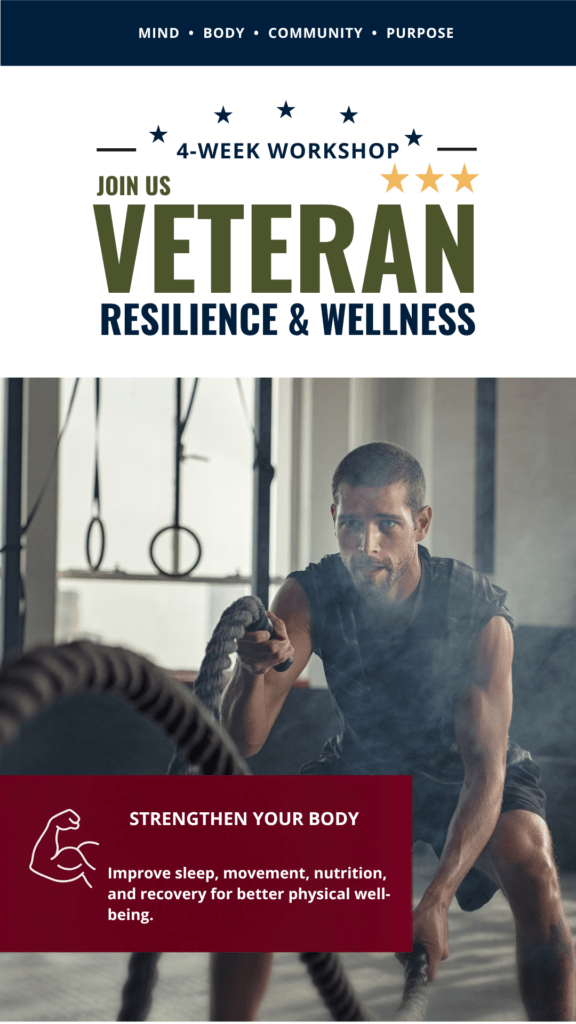
10 Benefits & Outcomes of Attending the Veteran Resilience & Wellness Workshop
1. Learn Practical Stress Management Skills
Participants will learn simple techniques to reduce stress and regain a sense of control during challenging situations.
2. Improve Emotional Resilience
Gain tools to better handle life’s setbacks, adapt to change, and recover more quickly from difficult experiences.
3. Develop Healthy Coping Strategies
Discover healthier ways to respond to stress, frustration, anxiety, and everyday challenges without relying on harmful habits.
4. Increase Self-Awareness
Learn to recognize personal thoughts, emotions, and behaviors, creating opportunities for positive growth and better decision-making.
5. Improve Physical Well-Being
Experience the benefits of movement, breathing exercises, and relaxation techniques that can support overall health and reduce tension.
6. Build Stronger Connections
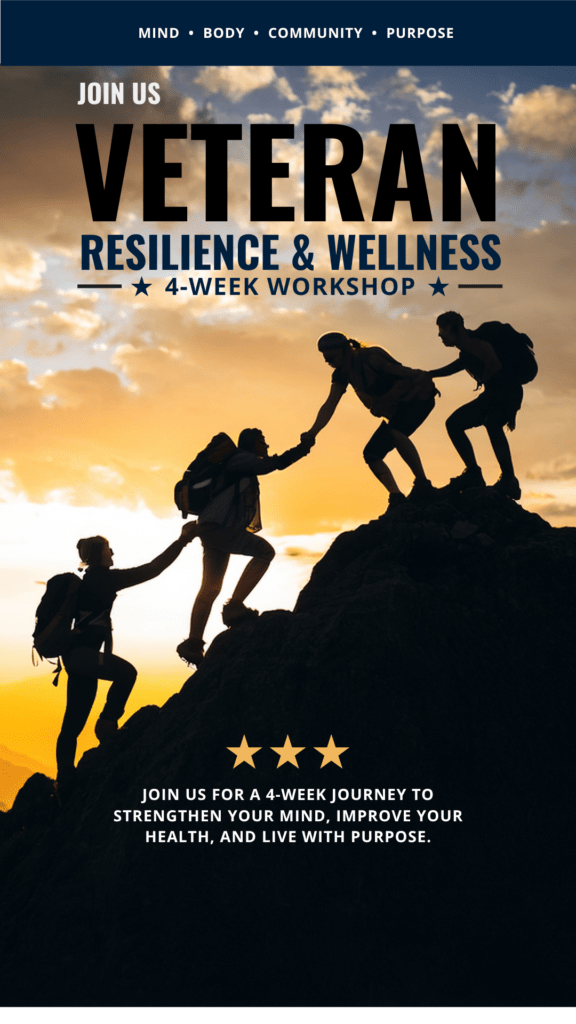
Connect with fellow veterans in a supportive environment, reducing feelings of isolation and strengthening a sense of community.
7. Enhance Focus and Mental Clarity
Practice mindfulness and attention-training techniques that can improve concentration, memory, and daily performance.
8. Create a Personal Wellness Plan
Leave with a customized set of tools and strategies that can be used long after the workshop ends to support continued growth.
9. Increase Confidence and Personal Empowerment
Develop greater confidence in your ability to overcome obstacles and take positive steps toward your goals.
10. Strengthen Mind, Body, and Purpose
Gain a deeper understanding of how mental, physical, emotional, and personal purpose work together to support long-term resilience and well-being.
Expected Outcome
By the end of this four-week program, participants will have a practical resilience toolkit, increased self-confidence, improved stress-management skills, and a stronger connection to both themselves and their veteran community. They will leave with actionable strategies they can use daily to improve their overall quality of life.